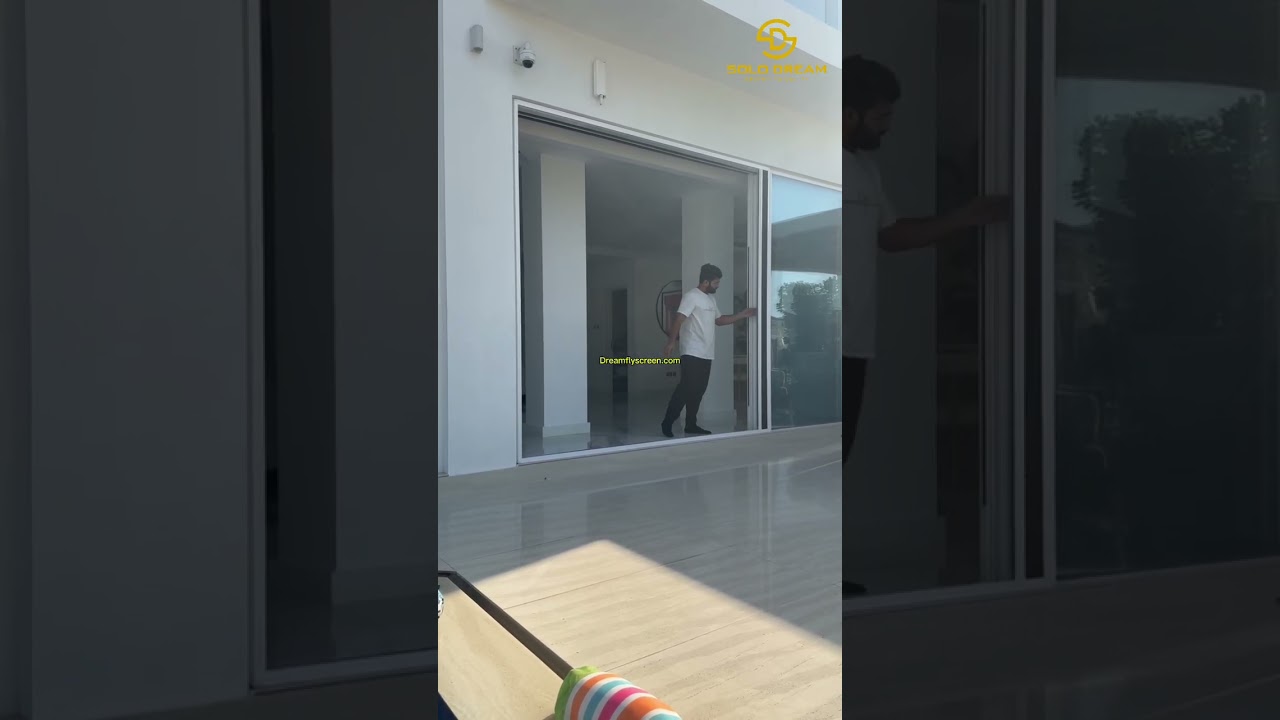
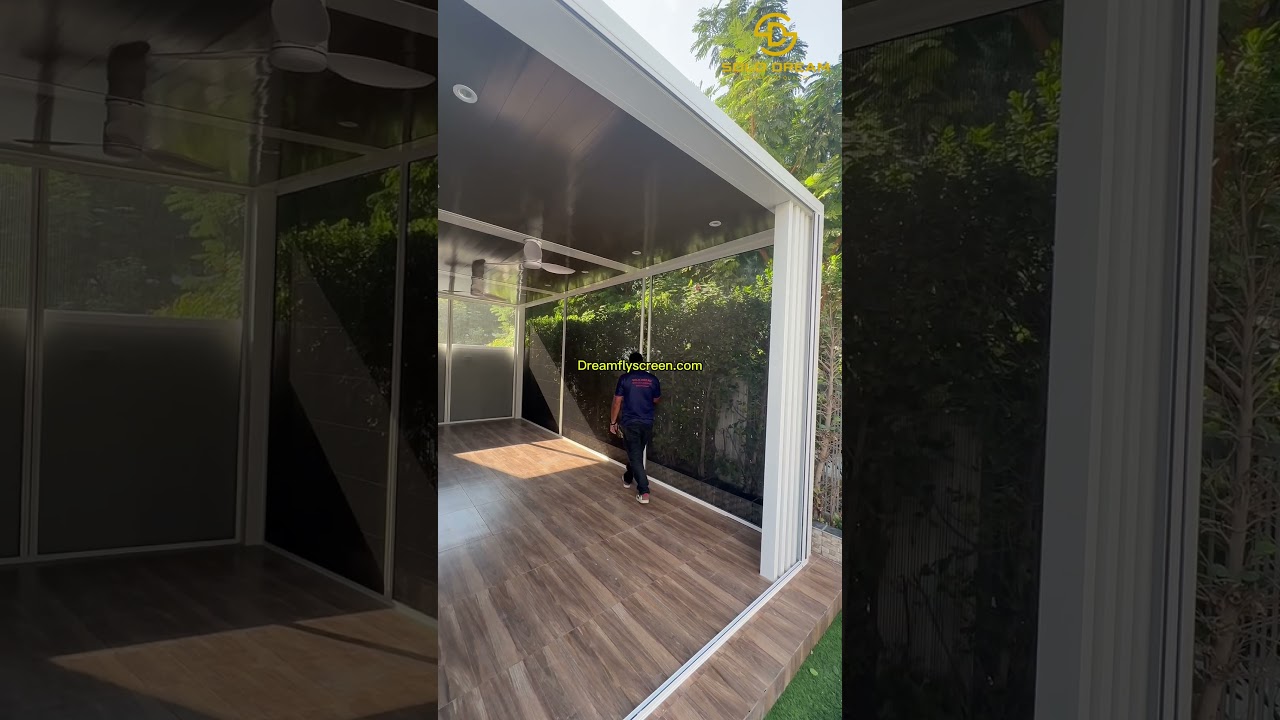
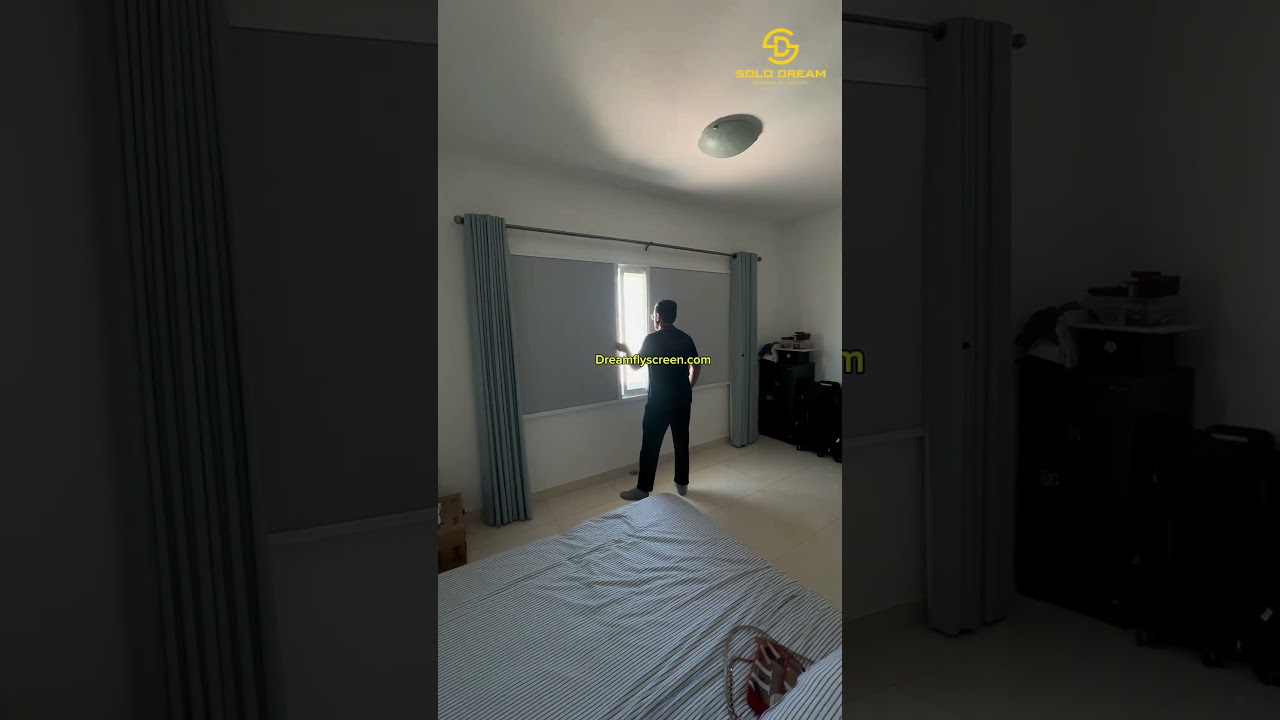
Short answer: fly screens are necessary in Dubai because the city combines year-round warmth, coastal humidity, permanent landscape irrigation and short intense rain events — four conditions that let mosquitoes and flies breed almost continuously. A screen is the only measure that lets you open a window for air without letting insects in, and it is the barrier that health authorities list first, ahead of sprays and repellents.
Below is the full case: what Dubai’s climate actually does, what gets into homes here, what the alternatives cost you, and where screens make the biggest difference.
Dubai's climate is a year-round breeding window
Mosquitoes need two things: standing water and warmth. Dubai supplies both for most of the year. Coastal humidity stays high through the long summer, temperatures rarely fall low enough to interrupt the breeding cycle, and the irrigation that keeps the city’s landscaping alive creates thousands of small permanent water sources. The UAE National Center of Meteorology publishes the underlying climate data.
Heavy rain events compress the problem into a few weeks. Water pools in drains, planters, construction sites and roof recesses, and a rise in mosquito numbers follows within a fortnight. That is the pattern residents notice after every significant rainfall.
Vector control here is organised at national level, and the UAE government’s communicable diseases programmes include a National Malaria Control Programme. Municipal fogging and larviciding reduce the outdoor population. Neither can stop the mosquito that is already on your balcony from coming through an open door — that part is the household’s job.

What actually gets into Dubai homes
- Mosquitoes — the main reason people call. Most active at dawn and dusk, which is exactly when residents want windows open.
- House flies — a food-safety issue more than a comfort one, particularly in kitchens and around outdoor dining.
- Sandflies and midges — small enough to pass through standard mesh; near water features and dense landscaping a finer weave is needed.
- Cockroaches and geckos — both use gaps around doors and windows. A properly sealed screen closes that route.
- Wasps and hornets — occasional but a real problem on higher floors where they nest on balconies.
We covered the local picture in mosquitoes in Dubai: what you need to know.
Seven reasons fly screens are necessary here
1. They are the barrier health authorities recommend first
The CDC states it plainly: “Use screens on windows and doors. Repair holes in screens to keep mosquitoes outdoors.” The US EPA gives structural barriers their own category in integrated mosquito control — “Install window and door screens if they are not already in place.” The World Health Organization’s dengue fact sheet lists window screens among the household measures that lower risk, alongside repellent and covering water containers. Dengue is not a hypothetical globally — WHO recorded over 14.6 million cases in 2024.
2. You can finally open the windows
Between November and March, Dubai evenings are pleasant. Without screens, opening a window at that time of day means letting insects in, so most homes stay sealed and air-conditioned year-round. A screen converts an unusable window into a usable one, and every hour of natural ventilation is an hour the AC isn’t running.
3. They replace chemicals you’d rather not run indoors
Plug-in vaporisers, coils and aerosols all work by putting an insecticide into the air you breathe, continuously, in a closed room. A screen is a physical barrier with nothing to inhale and nothing to replace. For households with infants, that difference matters — see protecting baby rooms from mosquitoes and eco-friendly insect control for Dubai homes.
4. Sleep
One mosquito in a bedroom costs a night. This is the most-cited reason customers give us, well ahead of disease risk.
5. Balconies and terraces become usable
A screened balcony door means the door can stay open through the evening. In apartments this effectively adds a room for four or five months of the year. See fly screens for balcony doors.
6. Pets and children
A screen keeps insects out and keeps a cat from a tenth-floor window ledge. Standard mesh will not survive a determined cat, which is why pet-resistant weaves exist — see pet-proof fly screens. Where the concern is fall protection rather than insects, safety screens are the right product.
7. Dust
A screen is not a dust filter, but a mesh does intercept a meaningful share of the coarser airborne dust and the leaf litter that blows in through an open window — a small, real benefit specific to this climate.

Fly screens vs the alternatives
| Method | Works while you sleep? | Ongoing cost | Chemicals indoors | Lasts |
|---|---|---|---|---|
| Fly screen | Yes | None | None | 8–10 years |
| Plug-in vaporiser | Yes | Refills, monthly | Yes, continuous | Ongoing |
| Aerosol spray | No | Cans, weekly | Yes | Minutes |
| Mosquito coil | Outdoors only | Ongoing | Yes, smoke | Hours |
| UV / electric trap | Partly | Electricity, tubes | None | Ongoing |
| Keeping windows shut | Yes | Higher AC bills | None | — |
The screen is the only line in that table with no recurring cost and nothing to breathe. Longer comparison in fly screens vs traditional insect barriers and mosquito repellent alternatives.
Which screen suits which opening
| Opening | Screen | From |
|---|---|---|
| Standard window | Single pleated | AED 450 |
| Wide window or patio door | Double pleated | AED 650 / 950 |
| Single door | Single pleated door screen | AED 800 |
| High-traffic family door | Two-way | AED 900 |
| Balcony, no floor track | Hinged | On quote |
| Window you never open wide | Fixed frame | AED 450 |
| Screen that hides completely | Roll-up cassette | On quote |
| Privacy plus insects | Blind screen | On quote |
| Oversized glazing | Extra wide / motorised | On quote |
All prices include installation. Full list on the fly screen price in Dubai page. If you live in a villa, types of fly screens for villas covers the combinations that work best.
Will a screen block the view and the breeze?
The two objections we hear most, and both are mostly a mesh-choice problem.
View. Dark grey or black mesh is far less visible from inside than white or silver, because it absorbs light rather than reflecting it back at you. Choose the mesh colour to disappear, not to match the frame.
Breeze. A standard 18×16 fiberglass weave costs you very little airflow. A fine no-see-um mesh costs you a lot, which is why we only fit it where sandflies are genuinely a problem. The measured trade-off is in do mosquito nets reduce sunlight or airflow?

What it costs, and what it saves
A screened villa is typically a one-off cost in the low thousands of dirhams, installed, with a one-year warranty and a realistic service life of eight to ten years. Set against that: refills and aerosols bought indefinitely, and the air-conditioning hours you spend because the windows can’t be opened. The screen is the only one of those that stops costing money after you buy it.
Ours are made to measure at our Deira workshop, fitted within 4–7 days of the free measurement visit, across 21 Dubai communities. More about how we work.
Making them last in this climate
- Rinse the mesh every 4–6 weeks with plain water and a soft brush. Dust is the main enemy and it comes off easily before it bonds.
- Vacuum bottom tracks monthly. Grit in the track causes nearly every operating fault we get called out for.
- Repair small tears at once. A 1 cm hole is an open door — the CDC’s advice to repair holes exists for a reason.
- Retract pleated screens in strong wind. A shamal distorts extended pleats.
- No solvents, no pressure washers. Both strip mesh and frame coatings.
Full routine in fly screen maintenance tips for the UAE climate, plus what summer heat does to fly screens.
Frequently asked questions
Are fly screens really necessary in Dubai?
Yes, if you want to open windows and doors. Dubai’s warmth, humidity and constant landscape irrigation keep mosquitoes and flies breeding for most of the year, and a screen is the only measure that blocks them without chemicals or closed windows.
Do fly screens actually stop mosquitoes?
A correctly fitted screen with an intact 18×16 mesh stops mosquitoes and house flies. The two failure modes are gaps at the edges and small tears — both fixable. More in do fly screens really stop mosquitoes?
Are there mosquitoes in Dubai all year?
Numbers rise sharply after rain and through the humid months and fall in the coolest weeks of winter, but the breeding cycle is never fully interrupted the way it is in a cold climate.
Do fly screens reduce air conditioning costs?
Indirectly, by making natural ventilation possible during the cooler months. The saving depends entirely on how often you actually open the windows once you can.
How much do fly screens cost in Dubai?
Windows from AED 450 and doors from AED 800, including installation. Wide, hinged, roll-up, blind and motorised screens are quoted after a free measurement.
How long do they last?
Eight to ten years for a custom aluminium-framed screen with basic cleaning. Adhesive and velcro nets usually last one season here.
Can screens be fitted to a rented apartment?
Yes — several mounting methods need no drilling into the frame. See installing fly mesh without drilling.
Which areas of Dubai do you cover?
21 communities across the city, from Deira and Business Bay to Arabian Ranches, Palm Jumeirah, Emirates Hills, JVC, The Meadows and Dubai South. Full list on areas we serve in Dubai.
The practical conclusion
Dubai gives you nine months of the year when outdoor air is pleasant at some point in the day, and an insect population that makes using it difficult. Fly screens are the one intervention that resolves that permanently, with no refills, no chemicals indoors, and no trade-off against ventilation.
Book a free measurement visit anywhere in Dubai — we measure every opening, show you mesh and frame options in person, and give a written price on the spot. Get your free measurement or call +971 58 632 5171. See every screen type on our services.