A damaged fly screen is rarely one problem. It is usually a symptom — brittle mesh, a worn roller, a frame that has moved — and the right fix depends on which one you have. Replacing the whole screen when only the mesh has failed is the most common and most expensive mistake.
Work through the diagnosis below before you call anyone. It takes five minutes and it changes what you should be paying.
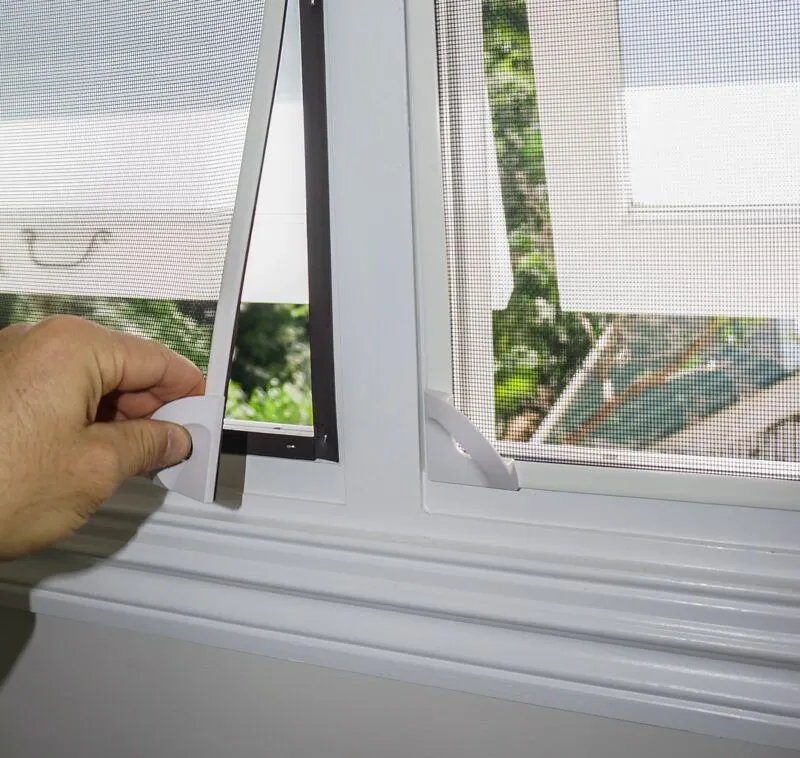
Step one: work out what has actually failed
| What you are seeing | Likely cause | What it usually needs |
|---|---|---|
| A clean tear or a hole | Impact, a pet, or a snag | Re-mesh |
| Mesh crumbles when touched | UV breakdown over years | Re-mesh |
| Mesh sagging or bulging out | The spline has worked loose | Re-seat the spline, or re-mesh |
| Screen will not slide smoothly | Track packed with sand, or worn rollers | Clean the track; replace rollers |
| Pleated screen will not stay closed | Cord tension or a failed spring | Mechanism service |
| Gap along the closing edge | Brush seal worn or missing | Replace the seal |
| Corner joints opening up | Frame has distorted with heat | New frame |
| Frame visibly bowed | Section too light for the span | New screen, heavier section |
Notice how many rows end in re-mesh rather than replace. Mesh is the consumable part. Frames, if they were made properly, outlast several sets of it.
Why mesh fails here faster than elsewhere
Two forces do the damage. The first is sunlight: photo-oxidation — the combined action of UV and oxygen — breaks polymer chains and leads to embrittlement. That is why old mesh crumbles rather than tears. The second is airborne sand, which abrades the weave and grinds into tracks and rollers.
A screen on a south or west elevation will reach the end of its mesh life years before one on a shaded north-facing window in the same building. If two screens in your home have failed at very different times, that is usually why.
Repair, re-mesh or replace?
Re-mesh when the frame is sound
If the frame is straight, the corners are tight and the mechanism still moves, the screen is worth keeping. New mesh goes into the existing frame and the screen comes back to as-new condition for a fraction of the cost. That is the job covered on our fly screen mesh replacement page.
Repair when one component has worn
Rollers, brush seals, handles and cords are serviceable parts. A sticking panel is very often nothing more than a track full of sand and a set of rollers that have flattened.
Replace when the frame has gone
Three situations justify a new screen. The frame is bowed or twisted. The corner joints have opened and will not pull back square. Or the screen was the wrong type for the opening from the start — a light window section fitted to a door, for instance. In that last case, replacing like for like just buys the same failure again.
If you are unsure what a sound screen should look like structurally, the general description of window screen construction is a useful reference — a mesh held in a frame, which is why the frame is the part worth saving.
What re-meshing actually involves
- The panel comes out and the old spline is lifted from the channel.
- The old mesh is removed and the frame is checked for square.
- New mesh is laid over the frame, held under even tension.
- Fresh spline is rolled into the channel to lock the mesh in.
- The excess is trimmed back and the panel is refitted and tested.
Tension is the part that separates a good re-mesh from a poor one. Too loose and the mesh ripples; too tight and it pulls the frame in at the middle. It looks simple and it is the reason DIY re-mesh kits so often end up baggy.
What you can reasonably do yourself
Clean the track. A vacuum nozzle and a stiff brush along the bottom channel fixes more sticking screens than anything else.
Re-seat loose spline. If the mesh has pulled out of the channel in one corner but is otherwise intact, a spline roller will push it back.
Patch a small hole. Adhesive mesh patches are a legitimate short-term fix on a window you barely use. They are visible, and they do not stop the surrounding mesh continuing to age.
What is not worth attempting: re-tensioning a pleated screen, replacing a retractable spring, or squaring a distorted frame. Those need the panel off and the right tools.
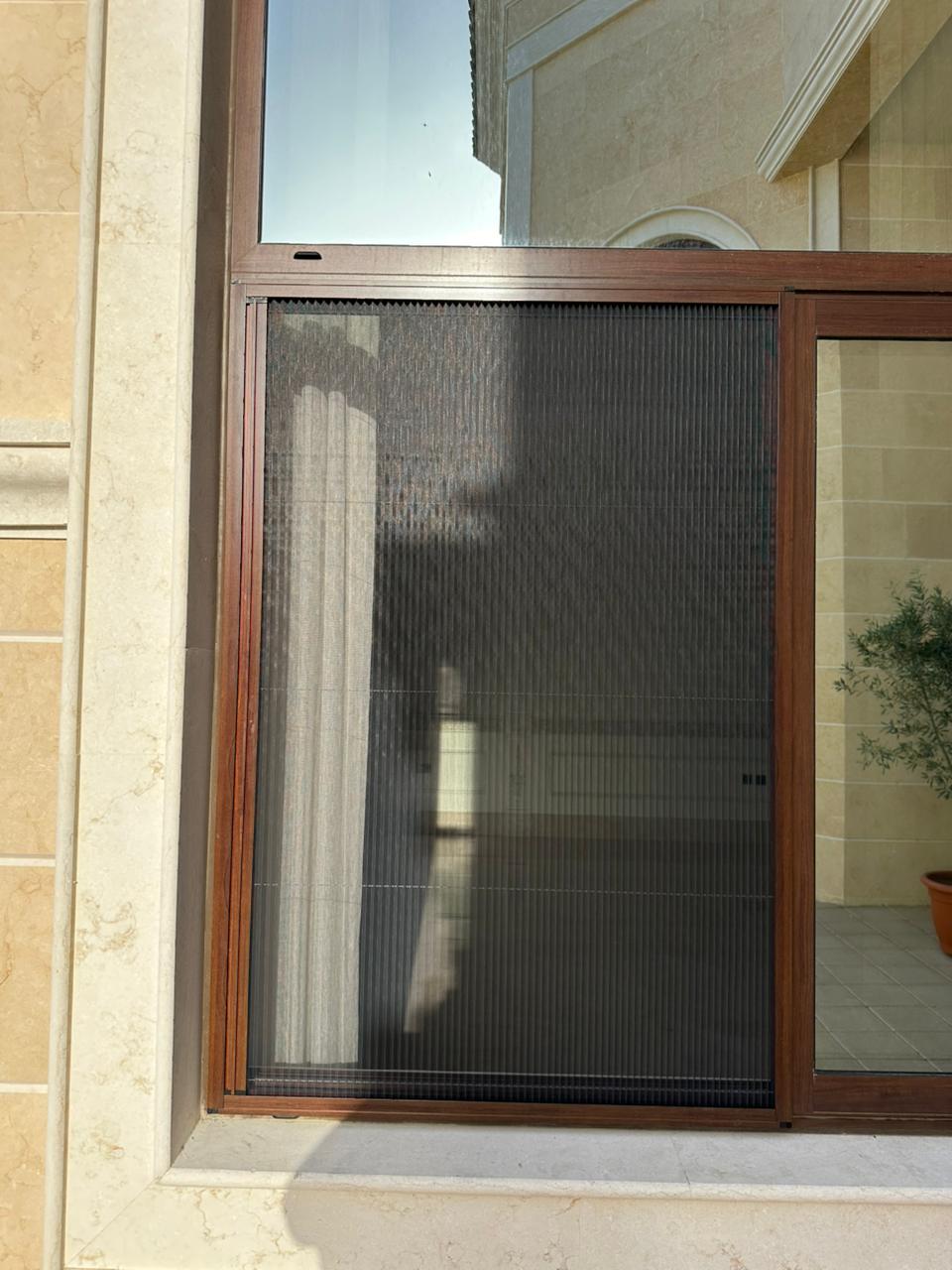
What it should cost
Re-meshing is priced per panel and comes in well below a new screen. A component repair — rollers, a seal, a handle — is lower again. A full replacement is priced like a new screen, because it is one. Current figures by screen type are on the fly screen price page.
One thing worth asking any quote: is the mesh grade going back in the same as what came out? If the original was standard fibreglass and the opening has pets behind it, this is the moment to move up a grade rather than repeat the failure.
Making the next set last longer
- Vacuum the mesh on a low setting every few months rather than scrubbing it.
- Keep the bottom track clear — sand in the track is what kills rollers.
- Do not lean on or push against the mesh. It is a barrier, not a rail.
- Close pleated screens slowly. Snapping them shut is what breaks cords.
The full routine, including what to do after a dust storm, is in our maintenance guide for the UAE climate.
Questions we get asked
Can any fly screen be re-meshed?
Almost all framed and pleated screens can. Some sealed roller cassettes are built as units and are replaced rather than re-meshed. We check on the visit and tell you which you have.
How long does a re-mesh take?
Per panel it is quick. Most homes with a few damaged screens are finished in a single appointment.
My screen is only two years old and the mesh has gone.
That is early. Either the grade was too light for the exposure, or the panel sits on a hard west elevation. Check what your warranty covers before paying for anything.
Is it worth re-meshing an old screen or should I start again?
Push gently on a corner joint. If it flexes or shows a gap, the frame is done. If it is solid, re-mesh and keep it.
The screen is fine but insects still get in.
Check the perimeter rather than the mesh. A missing brush seal along the closing edge leaves a continuous slot, and no amount of mesh quality compensates for that. Our guide to the best screens for keeping mosquitoes out explains where the gaps usually are.
Want someone to look at it? Book a free assessment visit and we will tell you whether it is a re-mesh, a repair or a replacement before quoting. See also our full range of screen services and the homepage.