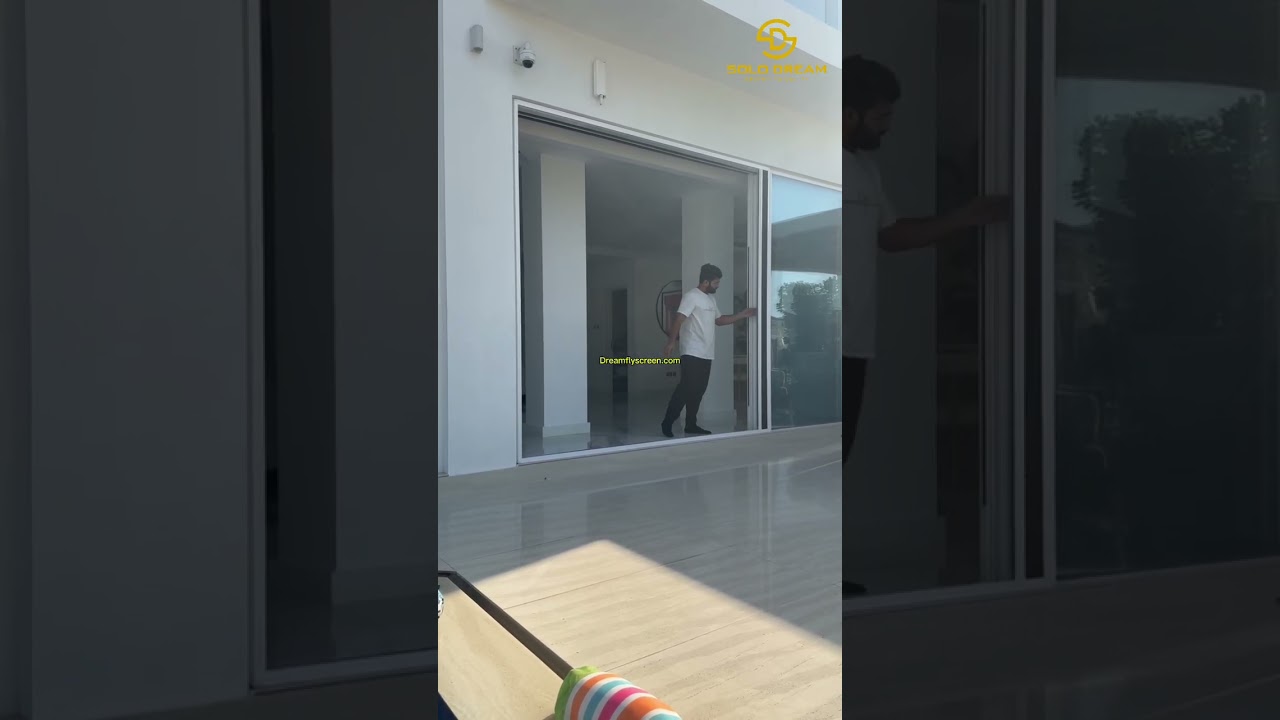
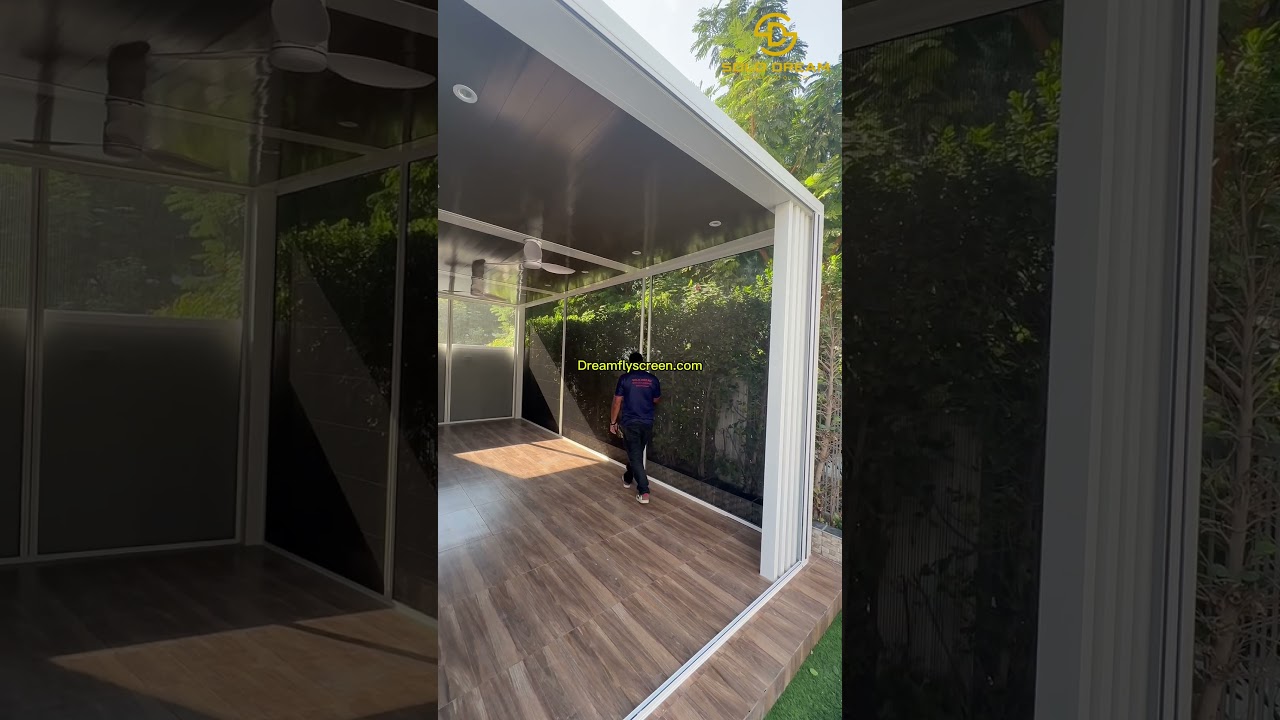
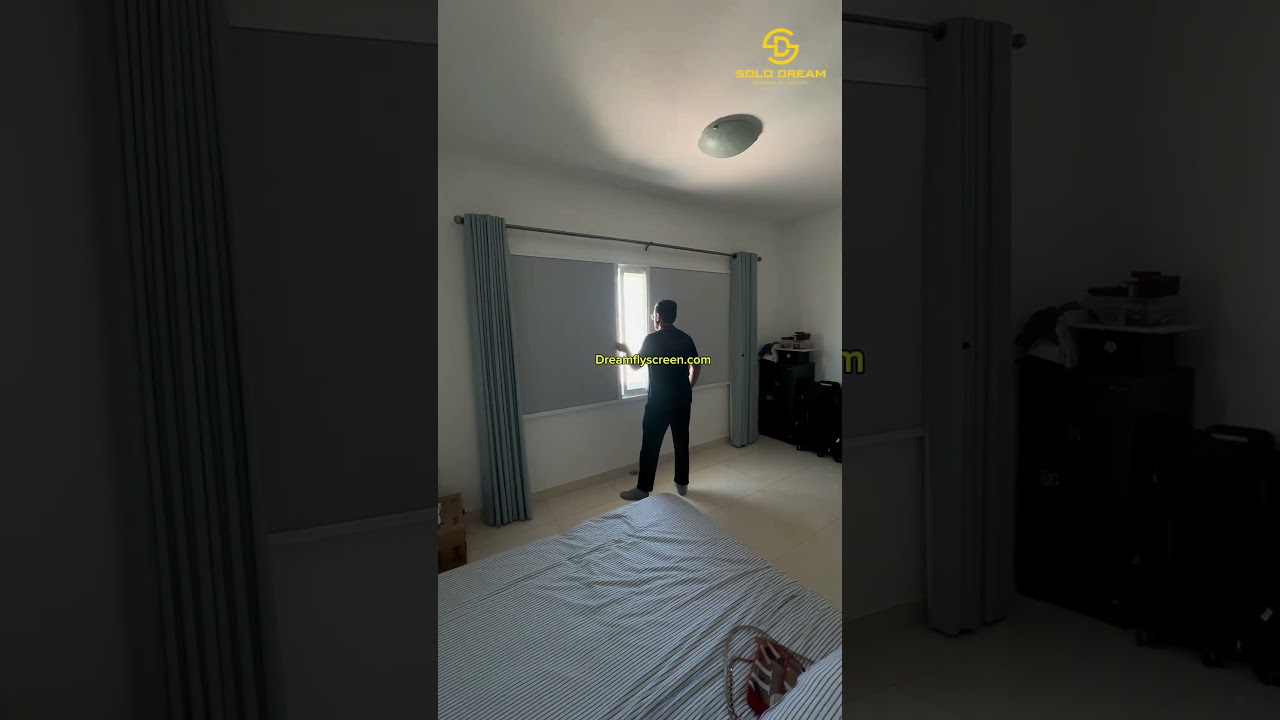
Mesh replacement means taking the perished netting out of your existing screen and fitting new mesh into the same frame. It starts at AED 300 for one sliding panel, which buys standard 18x16 fibreglass mesh, new spline, a cleaned track and the panel refitted and tested. The frame stays. Only the mesh is renewed.
Almost every screen that fails in Dubai fails at the mesh. The aluminium frame around it will usually outlast two or three sets of netting, so replacing the whole unit is rarely the sensible option. What matters is which grade of mesh goes back in, because that single choice decides whether you are doing this again next summer or in eight years.
What mesh replacement actually involves
The mesh in a screen is held in place by a rubber spline pressed into a channel around the frame. Re-meshing is the process of removing that spline, lifting out the old netting, cutting new mesh to size, and rolling fresh spline back into the channel under even tension.
Tension is the part that separates a good job from a poor one. Too loose and the mesh ripples and pulls away from the channel within weeks. Too tight and it bows the frame out of square, which stops the panel sealing along its closing edge. On pleated and roll-up screens there is a further step: the cords that run through the pleats have to be re-threaded and re-tensioned so the folds sit evenly when the screen is drawn across.
We do this at your home. A sliding panel takes under an hour and the door is never left standing open while a panel sits in a workshop.
The three mesh grades and which suits your home
We fit three grades. They differ in what they stop, how much air they let through, and how they behave under UV.
| Grade | What it stops | Best for |
|---|---|---|
| Standard fibreglass, 18x16 | Mosquitoes, house flies, wasps | Most windows and doors. Included at AED 300 |
| Fine mesh | Sandflies, midges, fine dust and pollen | Homes near water features, dense landscaping or open desert |
| Pet-resistant weave | Everything standard mesh stops, plus claws | Any panel a cat or dog pushes against |
Standard fibreglass is what nine out of ten homes need. The 18x16 count refers to strands per inch: eighteen one way, sixteen the other. That weave is fine enough to stop a mosquito and open enough that you barely lose any airflow, which matters when the whole point of the screen is being able to leave the window open.
Fine mesh has a much tighter weave. It stops the small biting insects that walk straight through standard netting, and it holds back a useful amount of dust and pollen. The trade-off is real and worth understanding before you pay for it: a tighter weave means noticeably less air movement. We only recommend it where sandflies or pollen are a genuine problem, not as a default upgrade.
Pet-resistant weave uses thicker, tougher strands. A cat that has decided to climb a screen will go through standard fibreglass on the first attempt and will not get through this. If your last mesh failed because of an animal, fitting the same grade again is throwing money away.
Standard fibreglass is included in the AED 300 sliding panel price. Fine and pet-resistant grades cost more, and the exact figure is confirmed at the free inspection once we have measured the opening.
How long each mesh lasts in Dubai heat
A properly tensioned mesh in an aluminium frame lasts eight to ten years here with basic cleaning. What shortens that is almost never the frame. It is three things acting on the netting itself.
- Ultraviolet light. Sun breaks down the polymer coating on fibreglass strands. The mesh loses its flex long before it looks damaged, which is why a screen can appear perfectly sound and then tear the first time somebody leans on it. A west-facing panel ages far faster than a north-facing one on the same building.
- Dust. Airborne dust is abrasive. It settles on the weave and works at it every time the screen moves, and it packs into the bottom channel where it grinds at the spline.
- Handling. Balcony and patio panels are opened several times a day. Window panels are barely touched. The difference in wear over five years is substantial.
Across the three grades the pattern is consistent. Fine mesh has the thinnest strands, so it is the first to go brittle in full sun. Standard fibreglass sits in the middle and is what the eight to ten year figure is based on. Pet-resistant weave uses the heaviest strands and holds up longest mechanically, though it is subject to the same UV as everything else.
Signs your mesh needs replacing
Some faults are the mesh. Some are not, and it is worth knowing which you have before booking anything.
The mesh needs replacing when:
- It is torn, holed, or has a section pushed out of the spline channel
- It cracks or crumbles when you flex a corner between your fingers, which means UV has finished it
- It sags visibly in the middle of the panel and no longer sits flat
- It has gone chalky or faded and feels stiff rather than springy
- You can see daylight along an edge where the mesh has pulled away
It is probably not the mesh when the screen sticks or will not slide. That is usually dust packed into the bottom channel. Vacuum the channel first and see whether it frees up before assuming the panel needs work.
A hole does not need to be large to matter. The CDC's guidance on mosquito prevention puts it in one line: "Use screens on windows and doors. Repair holes in screens to keep mosquitoes outdoors." A one centimetre gap is an open window as far as a mosquito is concerned.
Mesh replacement cost in Dubai
| Job | Price | Works out at |
|---|---|---|
| Sliding panel, 1 | AED 300 | AED 300 per panel |
| Sliding panels, 2 | AED 500 | AED 250 per panel |
| Sliding panels, 3 | AED 600 | AED 200 per panel |
| Pleated, roll-up, hinged or blind screen | AED 400 to AED 1,000 | By screen type and width |
Those figures include standard 18x16 fibreglass, new spline, the channel cleaned and the panel refitted and tested. Fine and pet-resistant grades are quoted at the inspection.
The price per panel falls as the count rises because most of the cost is the visit rather than the material. Three panels done in one appointment cost AED 600 rather than AED 900, which is why most villa owners have the whole ground floor done at once.
For comparison, a completely new screen starts at AED 450 for a window and AED 800 for a door. Our full price list covers all eight types we build.
Frame types we can re-mesh
If the frame is straight and the channel is intact, it can take new mesh. These are the types we handle:
- Sliding panels. The most common job in Dubai apartments and villas. Same method whether the panel runs beside a patio door or a window.
- Pleated screens, single and double. New mesh plus new cords, then re-tensioned so the pleats fold evenly. See single pleated and double pleated.
- Roll-up cassette screens. New mesh and the spring roller re-tensioned. More on roll-up screens.
- Hinged and two-way screen doors. Re-meshed in the frame, then the closing edge checked for light gaps. See hinged and two-way.
- Fixed frames. The simplest re-mesh of all, since there are no moving parts. See fixed screens.
- Blind screens. The privacy blind and the netting are separate layers, so the mesh can be renewed without touching the blind. See blind screens.
What we cannot re-mesh: velcro, adhesive and magnetic curtain nets, because there is no channel to hold spline. Frames that are visibly bent or cracked at the corners also need replacing rather than re-meshing, since a panel out of square will never seal again no matter how well the new mesh is fitted.
Areas we cover
We work across 21 Dubai communities, including Deira, Business Bay, Downtown Dubai, Palm Jumeirah, Jumeirah, Arabian Ranches, Emirates Hills, The Meadows, The Springs, The Lakes, JVC, Dubai Hills Estate, Damac Hills, Tilal Al Ghaf, Al Barari, Al Furjan, Dubai South, Meydan, District One, Villanova and Jumeirah Golf Estates. The full list is on areas we serve in Dubai.
Keeping new mesh in good condition takes about ten minutes a month: rinse the netting with plain water every four to six weeks and vacuum the channels. The full routine is written up separately, and what summer heat does to screens explains the UV side in more detail.