Fitting a fly screen is not difficult. Fitting one that actually seals is where people come unstuck — and a screen that does not seal is worse than no screen, because you stop checking.
This guide covers the measuring, the fitting and the five mistakes that account for most of the gaps we are called out to fix.
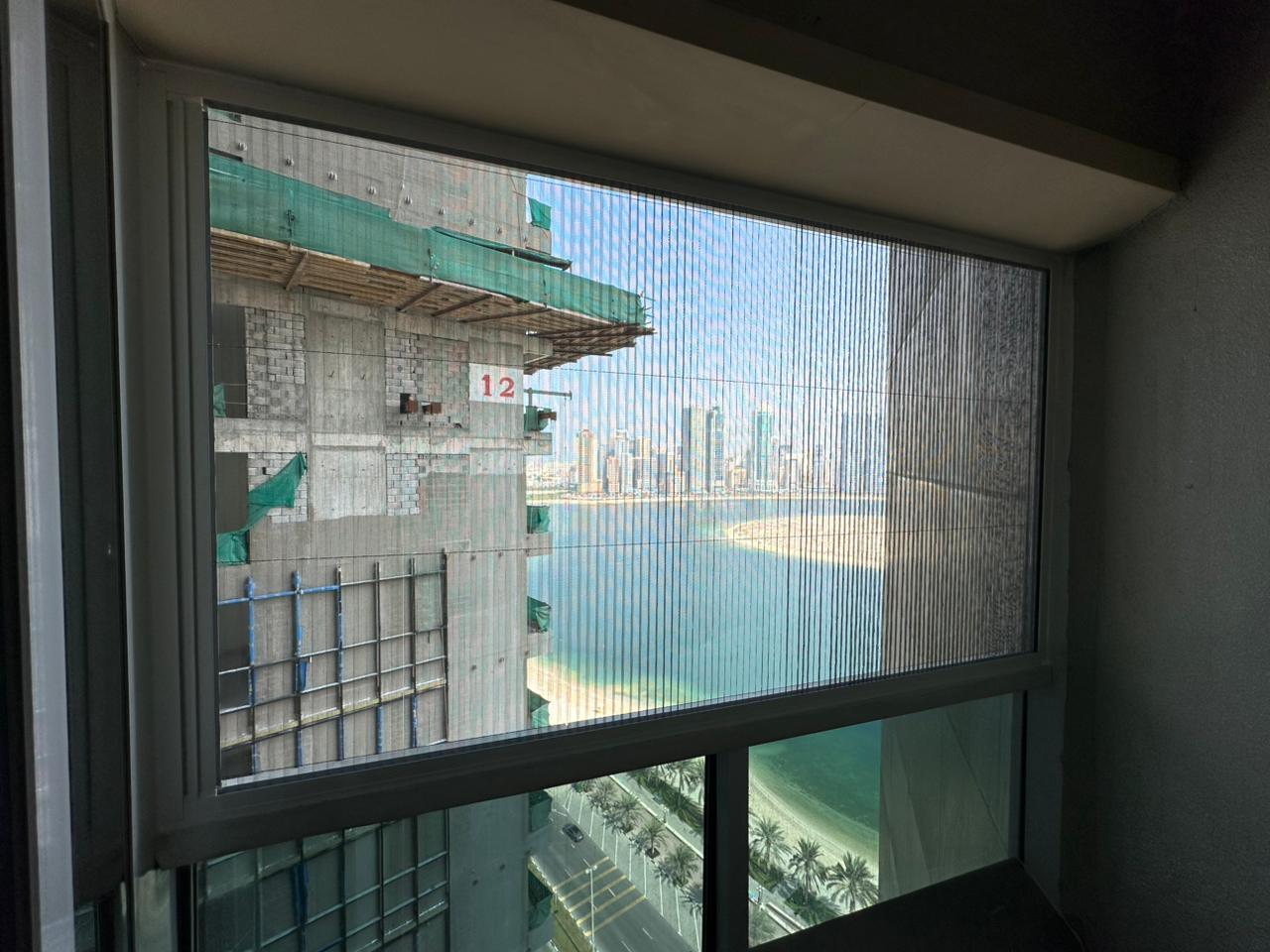
First: is this a job worth doing yourself?
Be honest about the opening before you start.
| Reasonable DIY | Get it fitted |
|---|---|
| Small, square window under 1.2 m | Any sliding or patio door |
| Ground floor, easy access | Anything above ground level from outside |
| A simple framed or fixed screen | Pleated, retractable or motorised systems |
| Frame is square and sound | Out-of-square reveals or rendered openings |
| You are willing to redo it if it is out | You want it right first time |
A fixed screen on a bedroom window is a genuine weekend job. A sliding door screen is not — the track alignment decides whether it ever runs smoothly, and that is set in the first ten minutes.
Measuring: where most attempts fail
The single most common error is measuring the glass. The screen does not sit on the pane; it sits in the reveal — the recess the window frame sits in. Measure the reveal.
- Width, three times. Top, middle and bottom of the opening. Use the smallest figure.
- Height, three times. Left, centre and right. Again take the smallest.
- Check square. Measure both diagonals. If they differ by more than about 3 mm, the opening is out of square and a rigid panel will not seal without packing.
- Check depth. You need enough reveal for the frame section plus clearance for handles to swing.
- Note obstructions. Handles, stays, blinds, curtain fittings and any AC unit in the opening.
Write the measurements down in millimetres. Rounding to the nearest centimetre is how a 6 mm gap gets built in before anything is cut.
What you need
- Steel tape measure and a pencil
- Spirit level
- Cordless drill with the right bit for your frame material
- Screwdriver, and a hacksaw if the kit needs trimming
- Spline roller, if you are meshing the frame yourself
- Someone to hold the other end on anything over a metre wide
Fitting a framed or fixed screen
- Dry-fit first. Offer the panel up before any fixings go in. Check it sits flush on all four edges with no rock.
- Mark the fixing points. Evenly spaced, and never closer than 50 mm to a corner — corners are the weakest part of an extruded frame.
- Pilot the holes. Drilling straight into aluminium or uPVC without a pilot splits sections and wanders off line.
- Fix the top first. Two fixings at the head, then level, then the sides, then the sill.
- Do not overtighten. Pulling a screw hard into a light section bows the frame inward and opens a gap at the middle.
- Fit the seal. Brush seal or foam along any edge that meets a moving part.
Fitting a sliding or pleated screen
The order changes, because the track does the work.
- Set the bottom track dead level. Everything downstream depends on this. A track that is out by a couple of millimetres over two metres gives you a panel that drifts open on its own.
- Fit the head track parallel to it. Measure the gap at both ends, not just one.
- Fit the side jambs and check the panel runs the full travel without binding.
- Set the rollers so the panel hangs plumb and the closing edge meets the jamb squarely along its whole height.
- Fit the brush seal last, once the panel is running properly. Fitting it first makes the panel feel tight and hides an alignment problem.
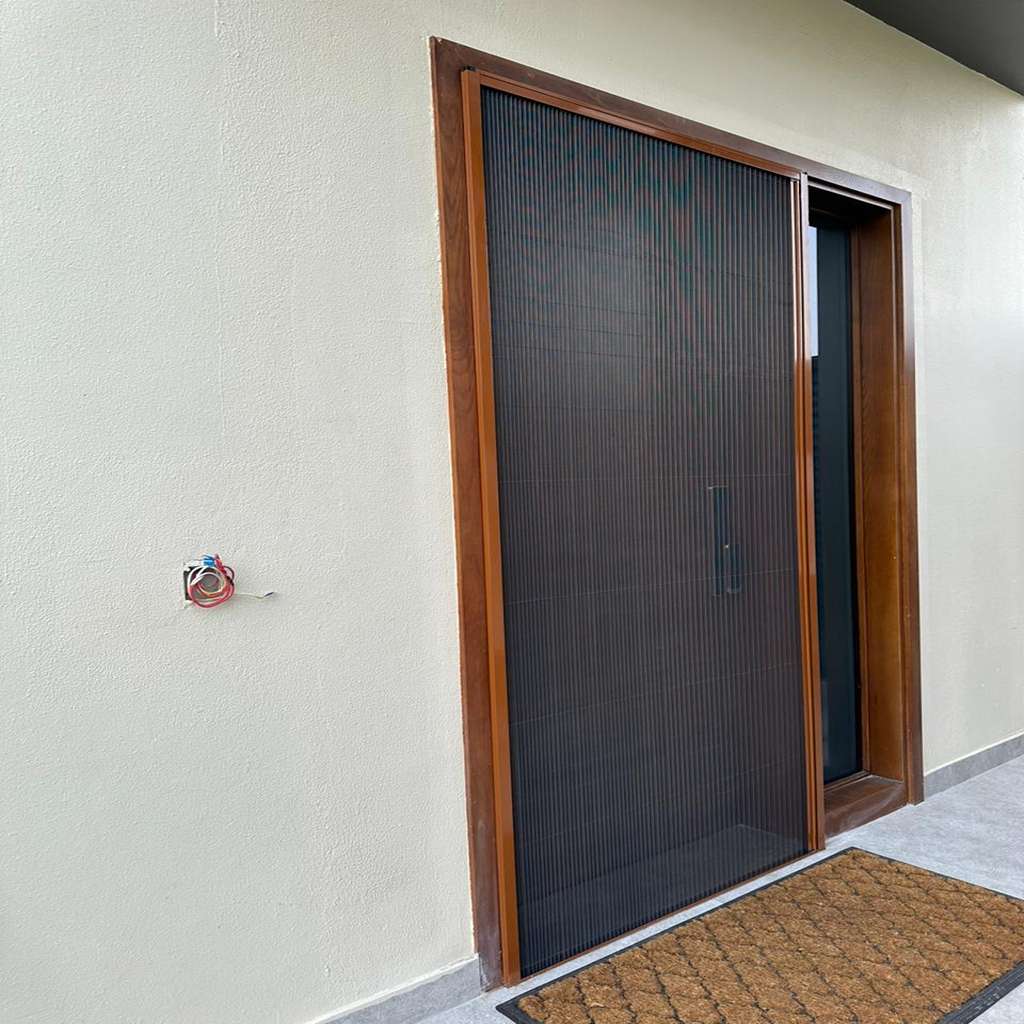
Pleated systems add cord tension to this. If the pleats do not stack evenly or the screen creeps open, the tension is wrong — and that is adjusted at the cassette, not by pulling harder.
Five mistakes that leave gaps
1. Measuring the glass, not the reveal. Covered above, and still the most common.
2. Assuming the opening is square. Very few are, particularly in rendered villa openings. Check the diagonals.
3. Skipping the brush seal. The closing edge is where insects get in. Mesh quality is irrelevant if there is a slot beside it.
4. Fitting over a handle. A screen that fouls the window handle either gets left open or gets forced. Plan the clearance before drilling.
5. Overtightening fixings. Bows the frame, opens the middle, and the gap is invisible until you look along the edge with a light behind it.
Health guidance is blunt about why the seal matters: the CDC advises using screens on windows and doors and repairing holes in them, which only works if the screen sealed properly in the first place.
Testing that it actually seals
Close the screen and stand inside with the lights off after dark, with an outside light on. Look along all four edges. Any line of light is a gap an insect can walk through. It is a cruder test than it sounds and it finds almost everything.
Then run the panel end to end five or six times. It should move with one finger and stop where you leave it.
Choosing the right screen before you fit anything
Fitting technique cannot rescue the wrong product. Windows and doors carry different loads, and wide spans need different sections. Start from fly screens for windows or fly screens for doors, and see extra-wide screens if the opening is over about two and a half metres.
On mesh, standard fibreglass suits most homes. It is fine enough for mosquitoes — insect netting typically runs at around 285 holes per square inch — while still passing air. Our guide to the best screens for keeping mosquitoes out compares the grades.
When to hand it over
Call someone if the opening is out of square, if it is above ground level, if the system is pleated, retractable or motorised, or if you have already fitted one and it does not seal. Our fly screen installation service includes the measurement visit, so the panel is built to the opening rather than trimmed to it.
Questions we get asked
Can I fit a screen without drilling?
On some window types, yes — tension-fit and magnetic frames exist. They suit rented flats where drilling is not allowed. They are less durable and they do not suit doors.
Inside or outside the window?
Inside the reveal for almost all UAE homes. An externally mounted screen takes the full sun and sand load and ages much faster.
How long should a fitted screen last?
Five to ten years for the frame, with the mesh as the consumable part. When the mesh goes, it is a re-mesh, not a new screen.
What does installation cost?
Our quoted prices include measurement and fitting rather than supply alone — the breakdown by screen type is on the fly screen price page.
Rather not do it yourself? Book a free measurement visit and we will fit it to the opening properly. Browse all screen services or start from the homepage.