A fly screen door closer has one job: bring the door back to the frame gently and hold it shut. When it stops doing that, you get one of two problems — the door bangs, or it never quite latches and insects walk straight in through the gap.
Almost every case is a ten minute fix with a screwdriver. You very rarely need a new closer. This guide shows how to read the symptom, which valve to turn, and how far.
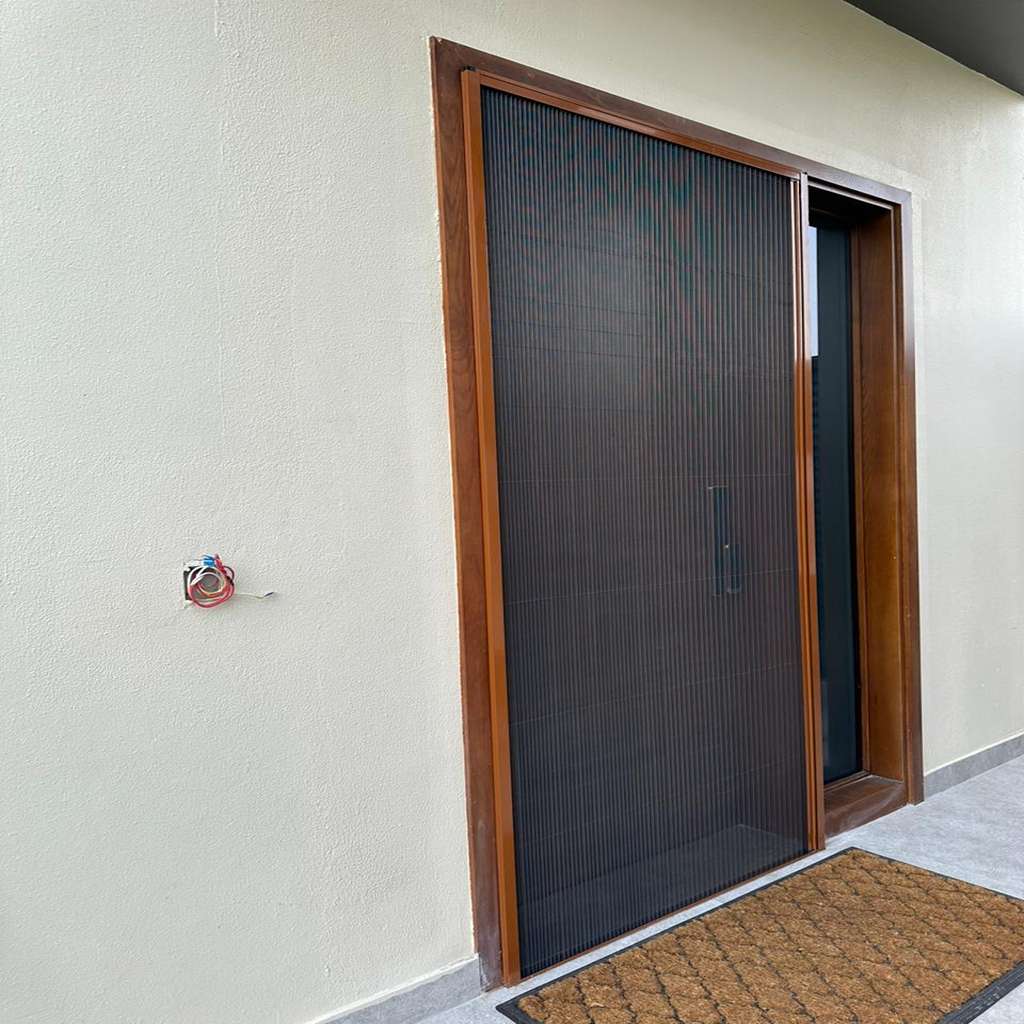
What a door closer actually does
Inside the cylinder there is a spring that pulls the door shut and a piston moving through oil or air that stops it slamming. Two small adjustment screws bleed that fluid at different points in the swing:
A worn closer is a five minute fix, though a full door replacement is worth pricing with our main fly screen range.
- Sweep speed — controls the door from fully open to about 15 degrees from the frame. This is the long part of the travel.
- Latch speed — controls the last 15 degrees, where the door actually meets the frame and seats against the seal.
They are separate on purpose. You want a slow, calm sweep and a slightly firmer latch, because that final push is what seats the screen against the brush seal. If you have never seen the mechanism, the engineering overview of door closers explains the valve arrangement clearly.
Which way to turn: on nearly every closer, clockwise slows the movement down and anticlockwise speeds it up. Work in quarter turns. A full turn is a big change, and more than two full turns out can push the valve past its seal and start an oil leak.
Diagnose it first: five symptoms and what each one means
Do not start turning screws at random. Open the door about 60 degrees, let go, and watch the whole travel. Then match what you saw:
| What you see | What it means | What to do |
|---|---|---|
| Door slams the whole way | Sweep valve too open | Sweep screw clockwise, a quarter turn at a time |
| Closes calmly, then bangs the last few centimetres | Latch valve too open | Latch screw clockwise, an eighth of a turn at a time |
| Stops 2–5 cm short and never latches | Latch too slow, or spring tension too low | Latch screw anticlockwise first; if that fails, increase tension |
| Drifts open on its own | Spring tension lost, or the frame is out of plumb | Check the frame with a level before touching the closer |
| Speed changed on its own, nothing was adjusted | Oil viscosity moving with temperature | See the seasonal section below |
Adjusting the sweep and latch valves, step by step
- Find the screws. They sit at the end of the cylinder, usually two small brass or steel slots marked S and L, or 1 and 2. On a slim screen-door closer they can be under a plastic end cap that pulls off by hand.
- Mark the starting point. Put a pencil dot on the screw slot before you move anything. If the adjustment goes wrong you can return to exactly where you began.
- Turn a quarter, then test. One quarter turn, open the door to the same angle, release, watch. Repeat. Resist doing two adjustments at once — you will not know which one worked.
- Set the sweep first, latch second. Aim for roughly four to six seconds from 90 degrees to nearly closed, then a firm, quiet seat in the final centimetres.
- Test with the wind. Open a window on the other side of the room and test again. A setting that works in still air often fails with cross draught, which is the normal condition in a Dubai villa with the balcony open.
If the closer leaks oil or has lost tension
An oily film on the cylinder body or a drip mark on the floor means the seal has gone. That one is terminal — a leaking hydraulic closer cannot be refilled, and turning the valves further will only speed up the loss. Replace the unit.
Lost spring tension is different and usually fixable. Many closers have a tension adjustment at the opposite end from the valves, either a hex socket or a threaded collar. Increase it a little at a time and re-test. If the door still will not pull shut at full tension, the closer is worn out.
Before you condemn anything, check the two things that imitate a failed closer: hinge screws working loose in the frame, and a bracket that has shifted so the closer arm no longer sits at the right angle. Both cost nothing to correct and both produce exactly the same symptoms.
Pneumatic and hydraulic closers are not adjusted the same way
Light screen doors often use a pneumatic closer — a tube of air with a single adjustment screw near the end. There is no separate latch control. Turning that one screw changes the whole closing speed, so you are balancing one compromise rather than tuning two stages.
Heavier aluminium screen doors use a hydraulic closer with the two valves described above. If your cylinder has only one screw, stop looking for a latch adjustment — you have a pneumatic unit, and the fix for a door that will not latch is usually tension or alignment, not the valve.
Why Dubai heat changes the setting twice a year
This is the part most guides leave out. Hydraulic closers run on oil, and oil thins as it warms. A door tuned in January, when overnight temperatures sit in the high teens, is running through much thinner oil by July when UAE National Center of Meteorology records daytime highs above 45 °C. Thinner oil flows faster through the same valve opening, so the door that closed politely in winter starts slamming in summer.
Nothing has broken. Expect to give the sweep screw a quarter turn clockwise going into summer and a quarter turn back in November. Two adjustments a year, thirty seconds each. A closer mounted on a west-facing door in direct afternoon sun will drift further than one in shade.
When the closer is not the problem at all
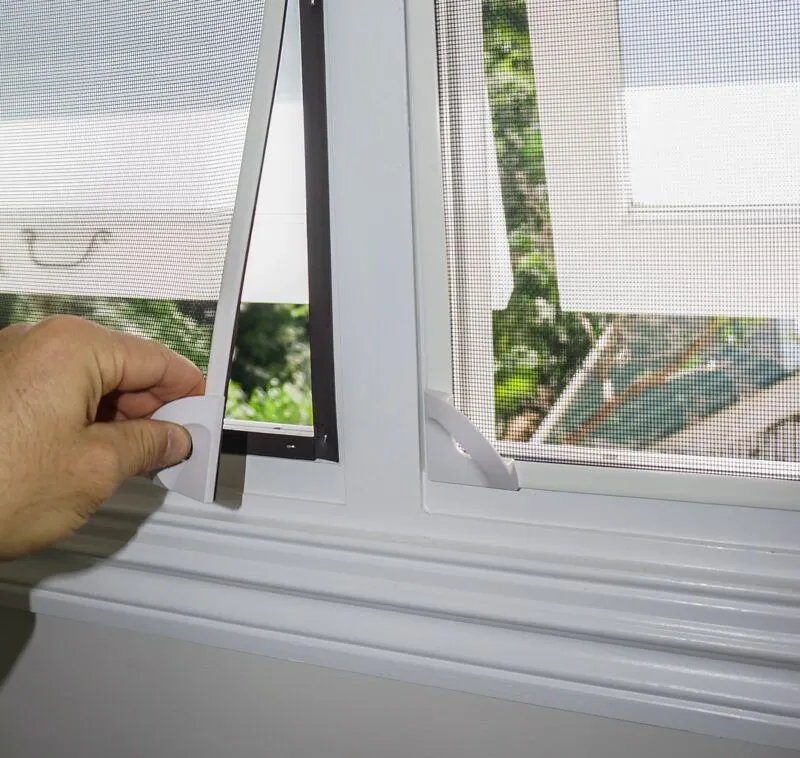
Plenty of “my closer is broken” calls turn out to be something else entirely:
- The magnetic strip has lost its grip. The door arrives, touches, and eases back open a few millimetres. The closer is fine; the strip needs replacing.
- The brush seal is flattened. Compressed brush no longer fills the gap, so the door latches but insects still get through.
- The mesh has stretched. A sagging panel changes the weight distribution and drags on the bottom track. If yours has gone slack, that is a mesh replacement job, not a closer job.
- Dust in the track. Fine sand packs into the bottom channel and adds friction the spring was never sized for. Vacuum it before adjusting anything.
If you are not sure which of these you are looking at, the decision tree in our guide to a damaged fly screen walks through it.
Questions people ask
Which screw is sweep and which is latch?
The one nearer the pivot end of the cylinder is usually sweep. If they are unmarked, open the door, turn one screw a full turn, and watch which part of the travel changed. Then put it back and work in quarter turns.
My door closes too fast only in the morning. Why?
Temperature again. Overnight cooling thickens the oil, then the sun hits the door and it thins within an hour. If the swing between the two is large, the closer is near the end of its life.
Can I use WD-40 on a screen door closer?
No. It is a solvent, not a lubricant, and it will thin the hydraulic oil and attack the seal. Clean the outside with a damp cloth and leave the cylinder alone.
How long should a closer last in Dubai?
Five to eight years indoors, less on a door in full afternoon sun. Heat and fine dust are what finish them, not the number of openings.
Do you fit closers on new screen doors?
Yes — every hinged door we make comes with a closer fitted and set, and the hardware is covered for twelve months under our fly screen warranty. You can see the full range of door types on our fly screen for doors page.
Still not closing properly?
Send a short video of the door closing on WhatsApp. Nine times out of ten we can tell you which screw to turn without a visit. If it does need a technician, we cover all of Dubai and the measurement visit is free.